
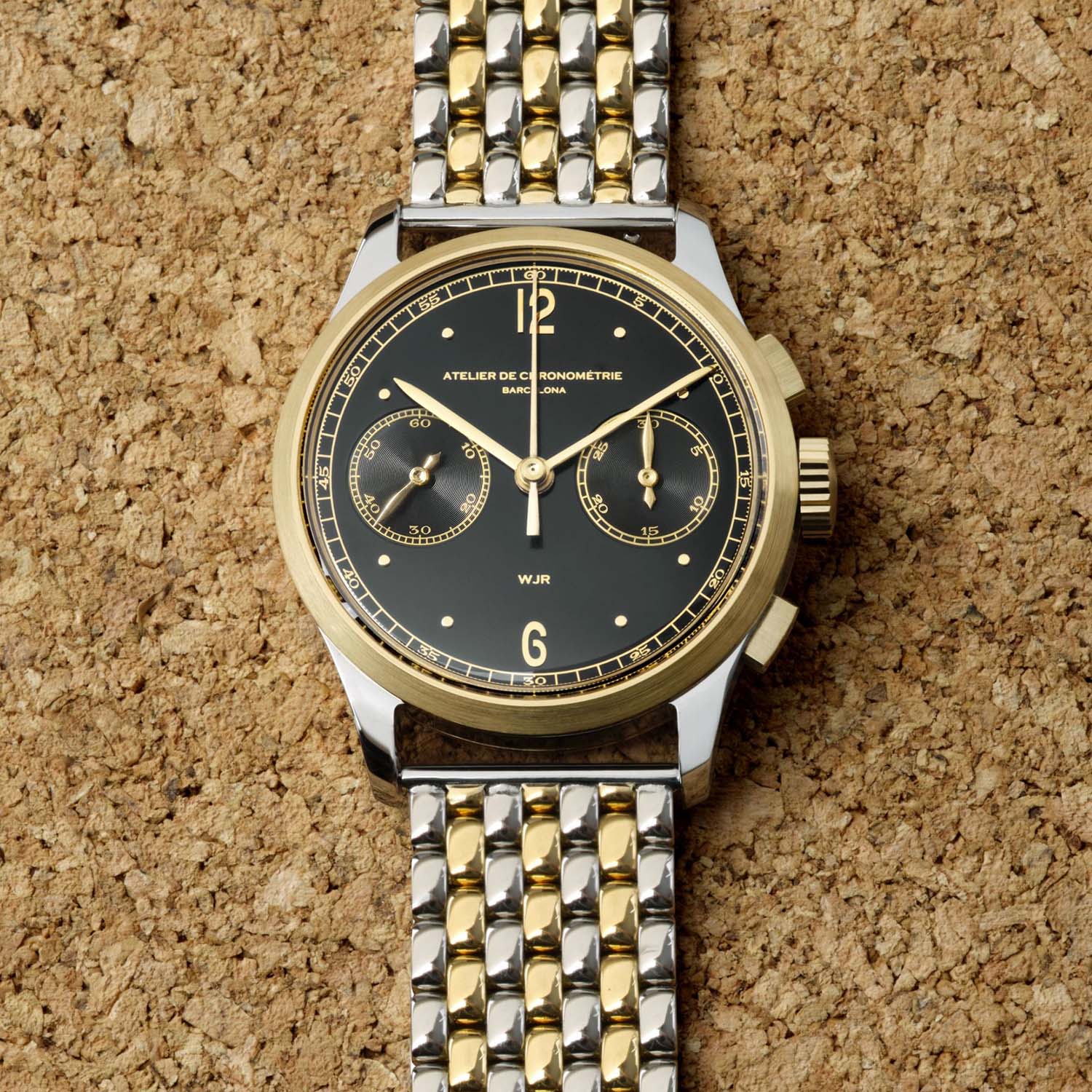
Atelier de Chronométrie · AdC16
The movement in detail
A chronograph minute counter can move to its next mark in one step rather than creep towards it. Atelier de Chronométrie developed just such an instantaneous switching system for the S440. For the owner, the point is straightforward: near a minute boundary, the counter leaves less doubt about which interval has finished. This is a technical analysis of the 2026 AdC16, already covered on October 7, rather than a report of a premiere today.
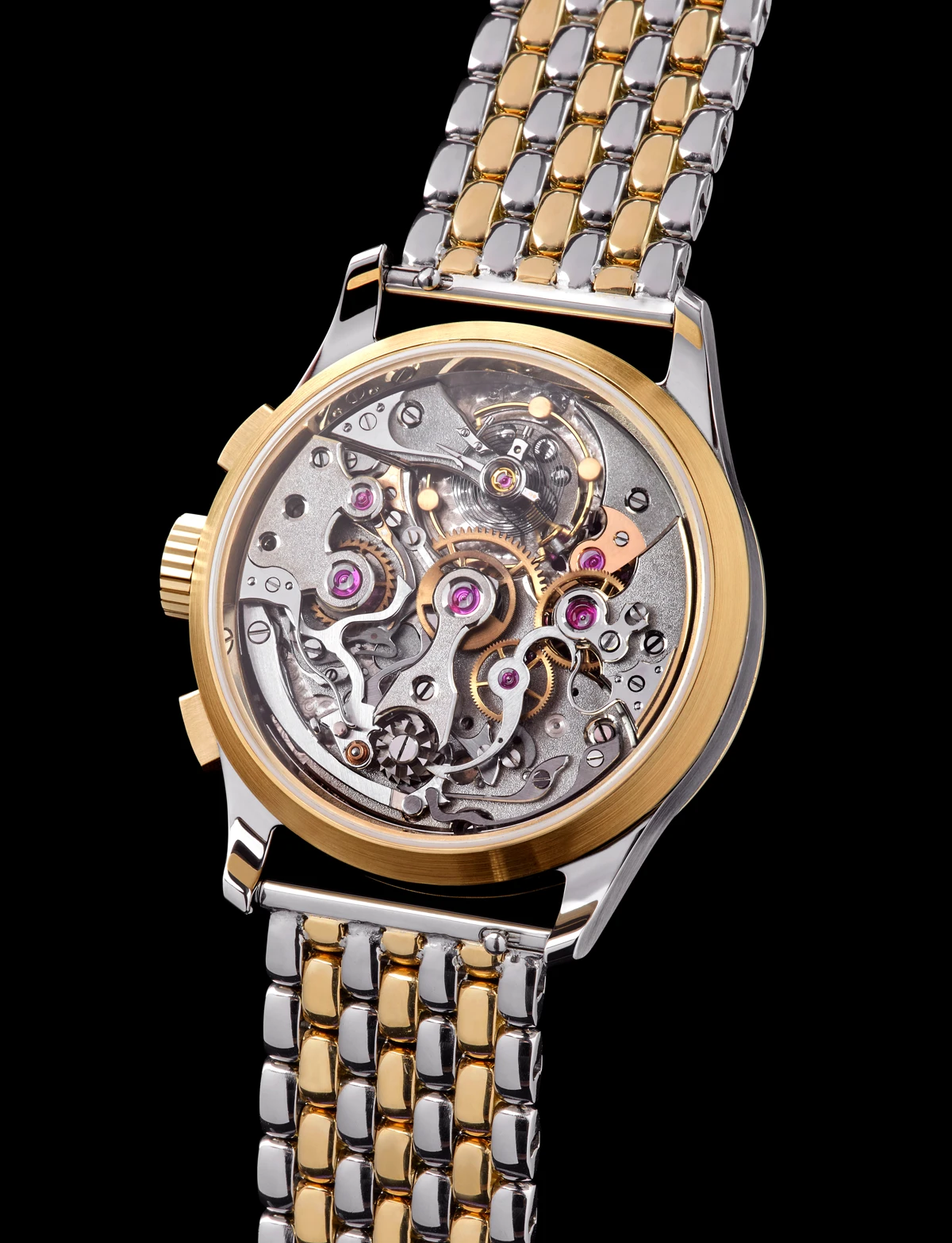
The S440 is based on the Valjoux 23, but the work goes beyond decorating an old movement. The workshop made new bridges, changed the minute counter system and created its own balance. Curved supports keep as much of the mechanism visible as possible. The chronograph is therefore interesting from both sides: the front shows the measurement, while the back exposes the construction producing it.
 Enlarge
Calibre S440 through the rear sapphire: open bridge geometry keeps the chronograph visible.
© Atelier de Chronométrie · SourceManual winding means a rotor neither obscures that view nor replenishes energy automatically. The S440 is specified at 52 hours of reserve, 20 jewels and 18,000 vibrations per hour, or 2.5 Hz. This is a leisurely chronograph rhythm: five vibrations per second give a nominal one-fifth-second increment without by themselves guaranteeing that measurement accuracy. Rate adjustment and the user’s reaction at the pushers also matter.
The AdC16 shown is a private commission with a black dial, the client’s initials and a beads-of-rice bracelet. Its 36 mm case combines a steel middle with 18-carat yellow-gold components. The official chronology dates the S440 debut to 2026 without specifying a day. On October 7, Hodinkee quoted €140,000–150,000 depending on customisation; that is a published guide rather than a fixed public offer from the workshop.

